Bathroom Mold Removal in Lafayette, LA
The ceiling over the shower keeps growing black specks no matter how often you wipe it. The wall behind the toilet has a stain the paint won’t hide. The cabinet under the vanity smells damp and the particleboard floor of it is swelling. Bathrooms are small rooms that get wet several times a day and, in Acadiana, never fully dry between. Call and tell us where the growth is — we handle bathroom mold in Lafayette and across Acadiana.
Surface, or something behind it
Spots on grout, caulk, and tile are surface growth, and on a hard surface under about ten square feet EPA says a homeowner can clean it. What we get called for is the other kind: growth on the ceiling drywall, in the wall behind the tub or shower, under the vinyl floor at the toilet flange, or in the vanity cabinet — places where a slow leak or a shower pan has been wetting porous material for months. Bleach isn’t the fix for that. EPA doesn’t recommend it as a routine practice, and it can’t reach growth inside drywall or under a floor.
Why bathroom mold comes back
- Mold can return after someone cleans the visible surface, because the growth in the drywall or under the floor was never removed.
- A supply line or drain seeping inside the wall shows up as mold on the outside of it, and no amount of scrubbing reaches the source.
- Porous material that has been wet and moldy — drywall, the vanity floor, the pad under a vinyl floor — has to come out instead of being wiped down.
- A bath fan that vents into the attic keeps the ceiling wet from above while the shower wets it from below.
If It Keeps Coming Back, We Answer 24/7

Lafayette bathrooms
The slab ranches from the 1950s through the 70s off Johnston Street, in Broadmoor, and across Scott and Carencro have original copper or galvanized supply lines inside the walls and cast-iron drains under the slab, and fifty-year-old shower pans over them. The bathroom is usually the first place a slab house tells you something is wrong: a soft baseboard, a cool wall, a stain low behind the toilet. In the newer houses toward Youngsville the story is more often a bath fan vented into the attic or a tub surround caulk joint that opened up.
What the removal looks like
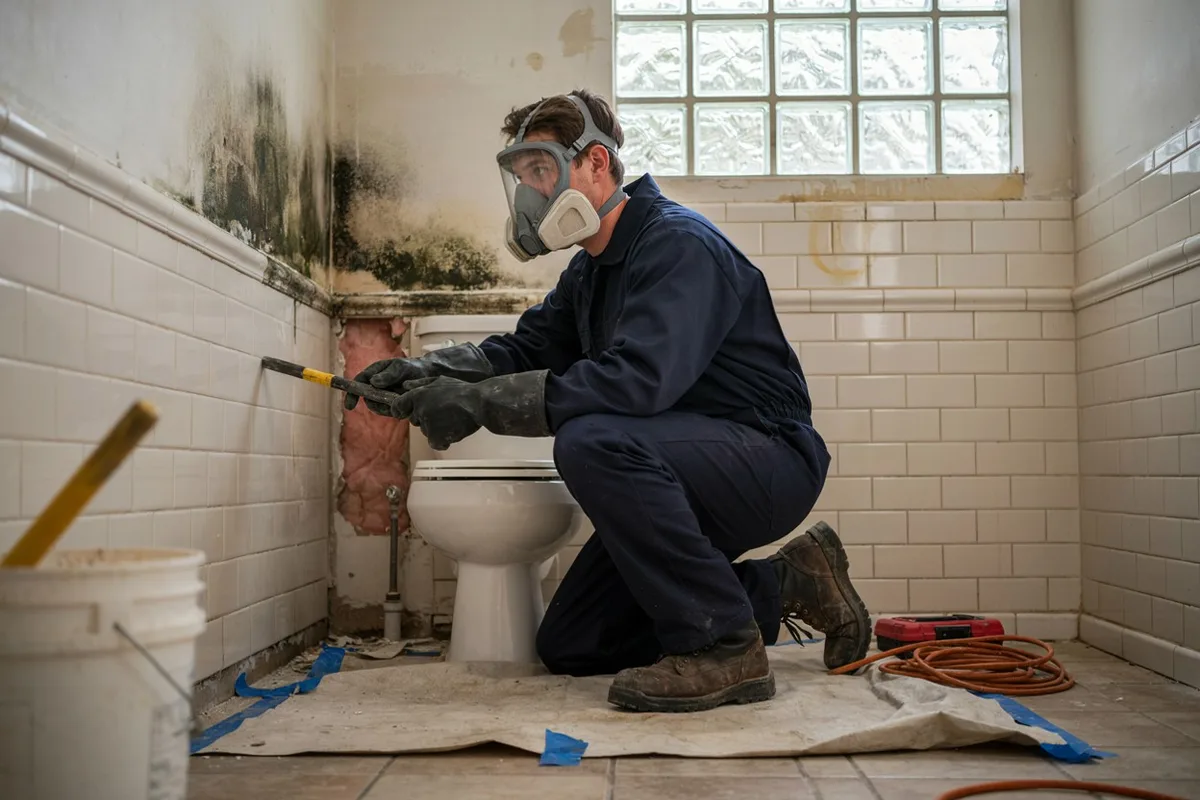
The bathroom gets sealed off from the hall under negative pressure. Affected ceiling and wall drywall, the vanity cabinet if the floor of it is gone, and wet subfloor around the toilet come out and are bagged in the room. Framing gets cleaned in place and dried. We find where the water is coming from — the pan, a supply line, the fan, the caulk — and tell you what has to change before the wall goes back. You get a written report of what came out and why, as Louisiana law requires.