Black Mold Removal in Lafayette, LA
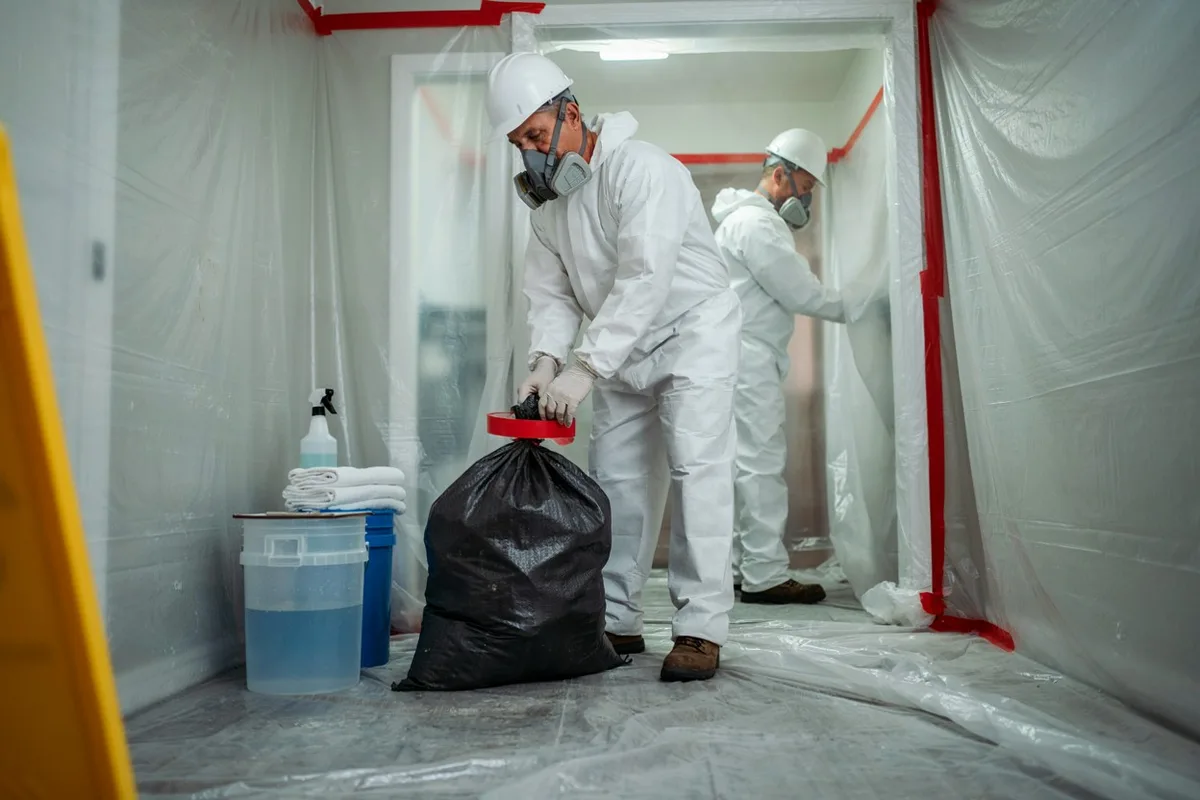
It’s dark, it’s spreading, and you searched the words “black mold” at eleven at night. Here is the calm version. CDC says it isn’t necessary to identify the type of mold in a home, because all molds should be handled the same way and removed. Dark growth gets the same containment, the same removal, and the same report as any other. What changes the job is what it’s growing on and how long that material has been wet. Call and tell us what you see.
What the dark patch usually is
The mold people call black mold — Stachybotrys — is greenish-black, slimy when wet, and grows on drywall, ceiling tile, fiberboard, and paper that have stayed wet for a long time. It needs constant moisture, which is why it shows up after long, slow leaks rather than one-time spills. But plenty of other common molds are dark too: Cladosporium runs olive to black, and some Aspergillus species do as well. From the room, you can’t tell them apart, and per CDC you don’t need to. The color doesn’t change the basic problem.
What a dark patch tells you
- Growth that dark on drywall or paper means the material stayed wet for a long time, not a weekend.
- The leak that fed it may have stopped months ago — the mold doesn’t care.
- Porous material with growth this established comes out; it can’t be wiped clean.
- CDC says exposure to mold may cause a variety of effects, or none at all — and either way, visible mold gets removed.
Tell Us What You See, 24/7
Where it turns up in Lafayette
On the ceiling under a bathroom whose shower pan has been seeping for a year. Low on the wall of a slab house that took an inch of water in 2016 and got dried from the room side only. Behind the baseboard where a supply line has been sweating inside the wall since the house was built. On the ceiling tile of a converted garage that leaks at the roof-to-wall joint every heavy rain. The common thread is time — a material that stayed wet long enough for dark, established growth to take hold.
How the removal goes
Containment first, under negative pressure. The affected drywall, ceiling tile, and insulation come out and are bagged inside the plastic before they move. Framing gets cleaned in place, HEPA-vacuumed, and left open to dry. We find where the water was coming from and tell you what has to change for the removal to hold. You get a written report of what came out and why, as Louisiana law requires.
Health, stated plainly
CDC lists stuffy nose, sore throat, coughing, wheezing, burning eyes, and skin rash as possible effects of damp and moldy homes, with stronger reactions possible for people with asthma or mold allergies and a higher infection risk for people with weakened immune systems. CDC also says the link between this specific mold and rare illnesses in infants has not been proven. We don’t diagnose anyone. If someone in the house is reacting, say so when you call — it changes how we sequence the job.